

01
Unclear Business Case for AI
Without a quantified investment case, the build-versus-buy question cannot be answered honestly — and funding decisions drift on enthusiasm instead of evidence.
Choose the right delivery model before committing budget, teams, and strategic control. We evaluate internal development, external solutions, and hybrid approaches against your technical, commercial, operational, and strategic requirements.
Whether to build an AI capability in-house or buy it from the market commits budget, talent, and time for years — and it usually has to be made while vendors, analysts, and internal advocates all pull in different directions.
Without a quantified investment case, the build-versus-buy question cannot be answered honestly — and funding decisions drift on enthusiasm instead of evidence.
Many AI tools impress in a proof of concept and fail in real deployment — undone by data quality, infrastructure, latency, or performance at scale.
Providers overpromise and underdeliver. Separating genuine capability from marketing takes technical depth most buyers do not have in the room.
External providers must meet your obligations — GDPR, the EU AI Act, industry security standards, and, increasingly, European sovereignty requirements.
Evaluating vendors and overseeing internal development both demand engineering judgment. When it is missing, the decision defaults to the best salesperson.
Before committing to a delivery model, these are the questions a leadership team must be able to answer with evidence.
Is the capability strategically differentiating?
Does a credible market solution already exist?
How much internal ownership is required?
Who should retain the data, models, and intellectual property?
Can the solution be integrated into existing systems?
What are the realistic internal development costs?
What are the long-term vendor and licensing risks?
What happens when the system must scale or change?
What must run on-device, on-premise, or in the cloud?
Which capabilities must remain inside the company?

We assess each option against your operational, technical, and commercial requirements. Internal development, external solutions, and combined approaches are evaluated on the same twelve dimensions — from strategic relevance and functional fit to total cost of ownership, data and IP control, and long-term flexibility.
The result is not a preference or a vendor pitch: it is a delivery-model recommendation your board can interrogate, with the evidence and trade-offs attached.
How the Engagement Works
A structured process in four phases, each closing with a concrete output.
We start on your side of the table:
Understand your business
Your objectives, constraints, and the strategic direction the decision must serve.
Clarify your requirements
Precise operational, technical, and commercial requirements, and what a successful outcome must deliver.
Assess your in-house capabilities
An honest evaluation of your team, infrastructure, and readiness to build and operate AI.
We systematically evaluate the available paths:
AI vendors and products
Researching, shortlisting, and screening solution providers on technical capability, integration effort, track record, and strategic fit — with claims tested, not taken on trust.
Development partners
Assessing specialized partners who could build with you or for you, held to the same standard.
We assess each option against your operational, technical, and commercial requirements:
Compare options
Feasibility and total cost of internal development versus external solutions, compared honestly and side by side.
Validate technical aspects
Technical depth, scalability, security, and integration verified hands-on, so the decision survives contact with production.
We carry the decision to the boardroom:
Define ROI expectations
A quantified investment case covering immediate value and long-term strategic implications.
Select the delivery model
A clear recommendation — build in-house, buy from the market, or deliberately combine both — with the rationale and safeguards to defend it.
We start on your side of the table:
Understand your business
Your objectives, constraints, and the strategic direction the decision must serve.
Clarify your requirements
Precise operational, technical, and commercial requirements, and what a successful outcome must deliver.
Assess your in-house capabilities
An honest evaluation of your team, infrastructure, and readiness to build and operate AI.
We systematically evaluate the available paths:
AI vendors and products
Researching, shortlisting, and screening solution providers on technical capability, integration effort, track record, and strategic fit — with claims tested, not taken on trust.
Development partners
Assessing specialized partners who could build with you or for you, held to the same standard.
We assess each option against your operational, technical, and commercial requirements:
Compare options
Feasibility and total cost of internal development versus external solutions, compared honestly and side by side.
Validate technical aspects
Technical depth, scalability, security, and integration verified hands-on, so the decision survives contact with production.
We carry the decision to the boardroom:
Define ROI expectations
A quantified investment case covering immediate value and long-term strategic implications.
Select the delivery model
A clear recommendation — build in-house, buy from the market, or deliberately combine both — with the rationale and safeguards to defend it.
Every option scored against your requirements, side by side — with the trade-offs made explicit.
An honest evaluation of your team, infrastructure, and readiness to build and operate AI.
The credible vendors, products, and delivery partners for your use case — screened, not listed.
Total cost of ownership for build, buy, and hybrid paths, modeled over five years on comparable assumptions.
Vendor, licensing, technology, and lock-in risks for each path, with mitigations.
A clear recommendation — build, buy, or a deliberate combination — with the rationale to defend it.
The required architecture boundaries and contract terms that protect data, IP, and exit options.
The decision prepared for the boardroom: evidence, options, recommendation, and next steps.
We have watched technologies, vendors, and architectures rise and fall for a decade. We have negotiated partnerships, run evaluations, and put AI systems into production ourselves. That experience is what lets us tell you — quickly and honestly — what will work in your environment and what will not.
We have designed and operated AI systems across the full deployment spectrum — secure on-premise infrastructure, cloud-native platforms, and hybrid and edge environments where latency, control, and sovereignty constraints decide the architecture. We guide you to the setup your requirements actually demand.

Our deep learning work began alongside breakthrough moments like AlexNet and Inception v2, and we have applied convolutional neural networks in production since 2016 — before most companies had started experimenting. That long baseline is how we distinguish durable capability from passing hype.
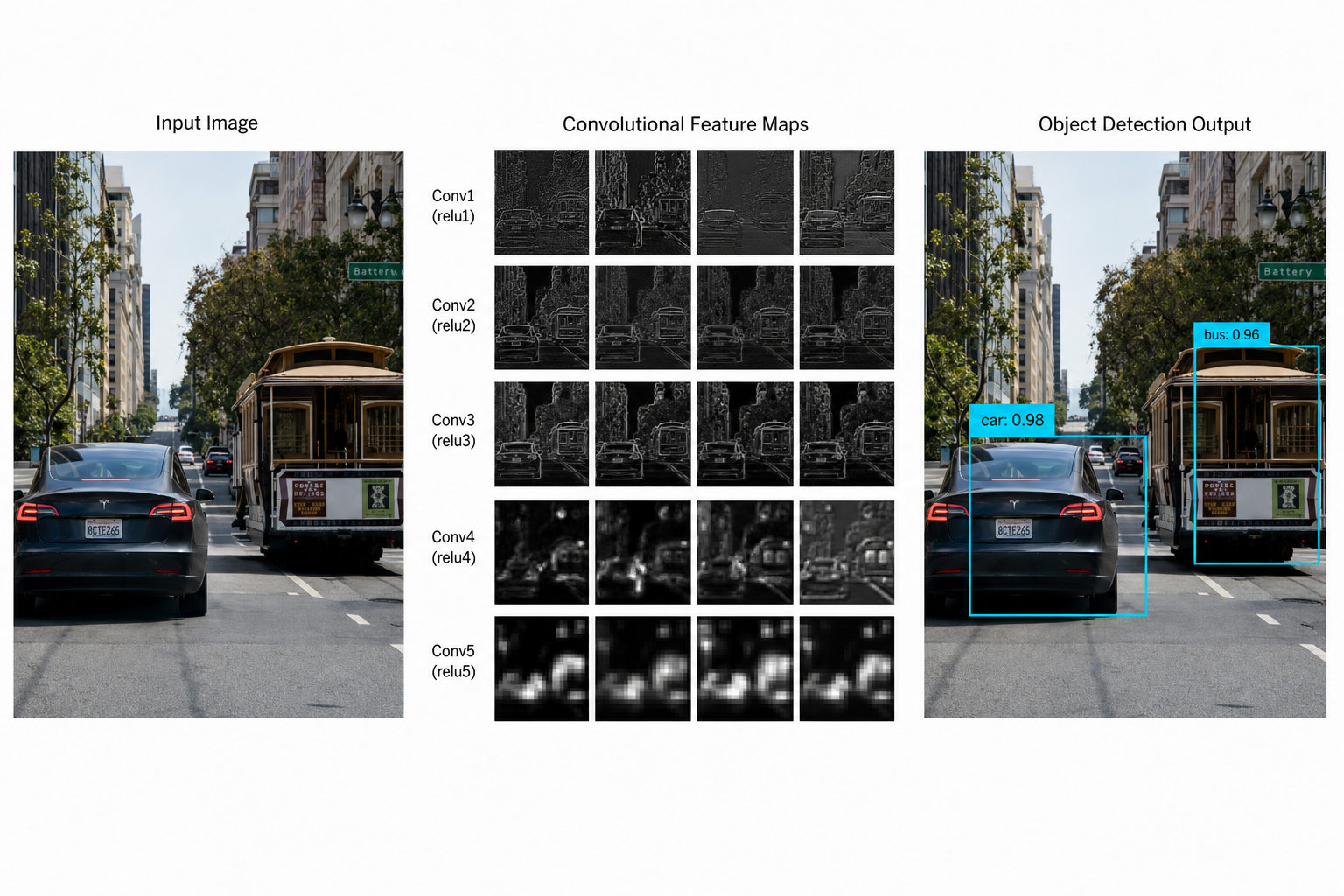
We build and test at the edge of generative AI ourselves, so our advice rests on first-hand evidence rather than vendor briefings. When we assess a GenAI claim, we have usually already tried the underlying approach — and we tell you plainly what it can and cannot do.

We have designed and operated AI systems across the full deployment spectrum — secure on-premise infrastructure, cloud-native platforms, and hybrid and edge environments where latency, control, and sovereignty constraints decide the architecture. We guide you to the setup your requirements actually demand.
AI Deployments – On-Premise & Cloud
Pioneers Since the Early CNN Era
Leading the Charge in Generative AI
The most expensive AI decision is the one made on vendor slides. Requirements-based due diligence costs a fraction of a failed implementation.
Before budget, teams, or contracts are committed. The engagement is designed for the window in which build, buy, and hybrid are still genuinely open options — that is when a requirements-based assessment changes the outcome rather than justifying one.
No. Many strong outcomes are deliberate combinations — for example, buying a platform while keeping differentiating models, data, and IP in-house. The decision matrix defines build-buy-partner boundaries at the capability level, and the recommended delivery model includes the architecture and contractual safeguards that make the combination workable.
On the same assumptions and the same horizon. We model five-year total cost of ownership for every path — including internal staffing, infrastructure, integration, licensing, maintenance, and exit costs — so a subscription price is never compared against an incomplete internal estimate.
No. We assess the proposals against your operational, technical, and commercial requirements, test the claims behind them, and compare them against the internal-development baseline. If deeper provider validation is needed, the engagement connects directly to our AI Provider Evaluation & Technical Due Diligence service.

Determine whether a provider, product, or technical solution can deliver under real operating conditions.

Translate strategic intent into clear product requirements, system boundaries, and technical decisions.

Set the AI direction, priorities, and investment logic your delivery-model decisions must serve.
We will assess every option against your requirements and give you a recommendation we are willing to defend in your boardroom.
Review Your Make-or-Buy Decision