

01. The Real Workflow Is Undocumented
Exceptions, workarounds, side spreadsheets, and handovers between systems decide how the work actually runs. None of it shows up in a process diagram, so it never makes it into the use-case backlog.
We place an AI engineer next to the people who run your processes. Together they observe the real work and build a working AI agent inside the actual workflow. We also help you build the Forward Deployed Engineering capability to repeat it without us.

Forward Deployed Engineering puts a senior engineer inside the business function that will use an AI system, rather than in a central platform team or behind a requirements document. The Forward Deployed Engineer (FDE) watches how the work is really done, builds against that reality, and stays until the system works for the people who use it.
Palantir made the role known. Today AI providers and enterprises use Forward Deployed Engineers to turn models and agents into working systems inside real processes. Uber, for example, pairs FDEs with domain experts in Agentic Pods across finance, legal, HR, and operations.
Unlike a consultant who hands over recommendations or a developer who waits for a specification, an FDE does discovery and delivery at the same desk and at the same time.
Use-case workshops collect what people can already describe. The workflows that cost the most rarely fit into a workshop answer.
Exceptions, workarounds, side spreadsheets, and handovers between systems decide how the work actually runs. None of it shows up in a process diagram, so it never makes it into the use-case backlog.
Consultants recommend, and a different team builds against a document months later. By then the assumptions are stale, and the hard cases surface only after the budget is spent.
Isolated assistants and proofs of concept pile up because nobody owns access rules, evaluation, and operation. The organization collects agents instead of changing how work gets done.
Combine both sides: our engineers deliver the first agents, and your organization builds the capability to continue.
Workflow discovery sprint: shadow the domain expert and document the process as it really runs
Agentic Pod: our FDE and your domain expert redesign and automate one bounded workflow
Embedded FDE: our engineer works inside one business function and ships working agents in short cycles
FDE role and pod model: role profiles, selection criteria, and how pods are staffed and steered
Pod operating rules: which workflows get a pod, system access, security review, and ownership after launch
Coaching your first FDEs: we pair with your engineers until they run pods on their own

An agent that runs in the redesigned workflow and is used by the people who own the process, instead of a demo on a separate screen.
The process as it actually runs, including exceptions, workarounds, decisions, and handovers between systems.
Next candidates ranked by frequency, data availability, reuse potential, the cost of errors, and ownership after launch.
Test cases built from real examples and edge cases, with the criteria the agent has to meet before it goes live.
Code, prompts, tool definitions, and integrations delivered into your repositories and owned by you.
Defined permissions, human-in-the-loop decisions, and escalation paths for the cases the agent must not decide alone.
Role profiles, selection criteria, the pod process, and templates your teams use to run the next workflow.
Who owns the workflow after launch, how performance is monitored, and how the agent is maintained and improved.
How the engagement works
Four phases, each closing with a decision or a working output, so you can stop, redirect, or scale at every gate.
We choose one bounded workflow with you and the domain expert who runs it. Our engineer sits with that person and observes the real work, including the exceptions.
We document the workflow as it really runs and decide which steps an agent should take over, which disappear, and where a person stays in control.
We build the agent next to the people who do the work, test it on real cases, and validate it with other employees before it goes live.
The agent goes into daily use with defined ownership and monitoring. We hand over the playbook and coach your own FDEs to run the next pod.
A Forward Deployed Engineer works inside the business function that will use an AI system. They observe the real process, build agents and integrations against it, test them with the people who do the work, and stay until the system runs in daily operation. The role combines software and AI engineering with enough process understanding to make decisions on the spot.
Classic AI consulting separates discovery from implementation: analysis and recommendations first, a build by another team later. Forward Deployed Engineering puts both at the same desk. Building becomes part of discovery, because a working agent reveals missing data, hidden rules, and integration constraints that no workshop anticipates.
Not to start. Our engineers can run the first pods for you. If you want to scale the approach across functions, we help you define the role, select candidates from your engineering or IT teams, and coach them until they run pods on their own.
A bounded workflow, a domain expert who runs it and has time to work with the engineer, access to the systems and data the workflow touches, and someone who will own the result after launch. Security and compliance review is a planned part of the process from the start.
A pod is scoped to one workflow rather than a whole program. Uber ran its Agentic Pods on a ten-day schedule. We agree the cycle length with you based on system access and how complex the workflow is, and every phase ends with a decision to continue, redirect, or stop.
Applied AI Engineering builds technically hard components for advanced AI products, such as computer vision, edge inference, or custom models. Forward Deployed Engineering works inside business processes and builds agents and automations around how people already work. Many organizations need both.
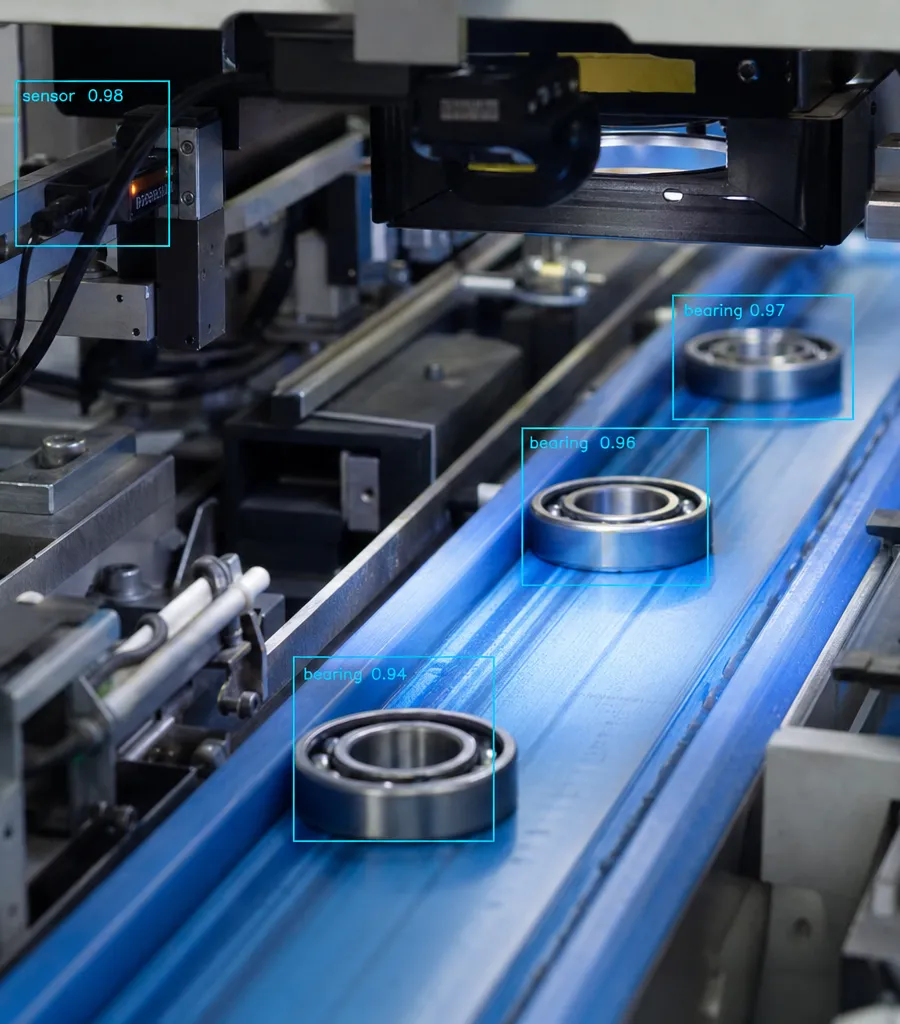
Build and validate the technically critical components of advanced AI products.

Lead AI initiatives from an approved decision into reliable operation.
Decision rights, governance, and ownership that turn single pods into an AI operating model.
We will put an engineer next to it, build the agent with your team, and show you how to do the next one yourselves.
Discuss a WorkflowDiese Seite gibt es auch auf Deutsch.