


01
Benchmarks measure someone else’s task
A leaderboard score tells you how a model does on a public dataset. It says little about your documents, your language mix or the edge cases your process actually produces.
A model that returns a valid answer can still return the wrong one. Evaluation is how you find out, ideally before your users or your auditors do.
Vendor benchmarks, public leaderboards and demo results all measure something real. They rarely measure your inputs, your error costs or the model version you will actually run. The gap between those numbers and your operation is where most disappointing pilots come from.
A leaderboard score tells you how a model does on a public dataset. It says little about your documents, your language mix or the edge cases your process actually produces.
Two models agreeing with each other can both be wrong. When the reference labels come from another model, the result measures similarity, not correctness.
Structured outputs guarantee that an answer fits the schema. They do not guarantee that the category, score or decision inside it is correct.
We measure six properties separately. A system can be strong on one and weak on the next, and each kind of failure costs you something different.
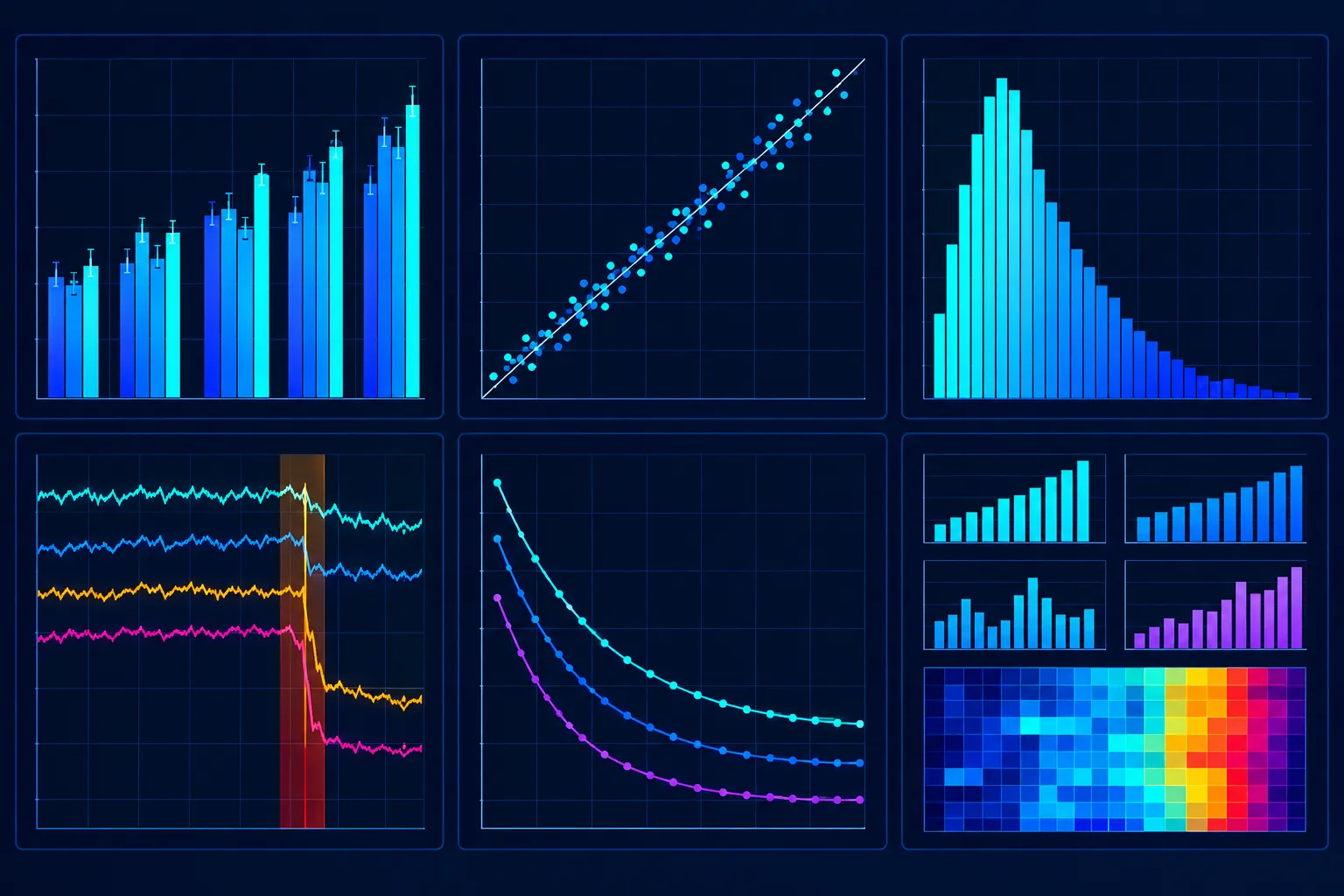
The reference is what actually happened in your process, such as the team that was right, the invoice that was approved or the defect that was confirmed. Another model’s opinion is not a reference.
The same inputs, run again on the same pinned model version. How far does the judgment move? Repeatability and correctness are separate questions, so they get separate tests.
If a system says 80 percent, is it right about 80 percent of the time across many cases? Any threshold you set on a probability is only as good as this.
A wrong support queue and a wrong payment approval are not the same mistake. Confidently wrong answers are weighted by what they would cost, not averaged away.
How many cases go to people, what happens on a timeout or missing result, and whether unsupported inputs are recognised rather than forced into an answer.
Measured end to end, including retries and human review, rather than as the price of a single model call in a demo.
Most claims about AI performance can be checked in ten minutes by asking what was compared, against what, and under which conditions. These are the questions we ask of vendor figures and of our own.
What exactly was compared, and against which reference?
Was the reference an established outcome, or another model’s judgment?
Which model version produced the result, and is that version pinned?
Do the test cases look like your inputs in language, length, noise and adversarial content?
What does a wrong answer cost in this workflow, and how was that weighted?

The Evaluation Set
The set of cases you score every candidate against is the most durable asset in an AI project. Models get replaced every few months, and a good evaluation set stays useful through all of them.

Where This Applies
The same discipline applies to every kind of model. The reference and the cost of an error change from case to case; the method does not.

Decisions with a fixed set of answers, such as which team, which category, or pass or fail. We measure accuracy per class, where the errors concentrate, and whether the stated probabilities hold up well enough to set a threshold on.
Benefits:
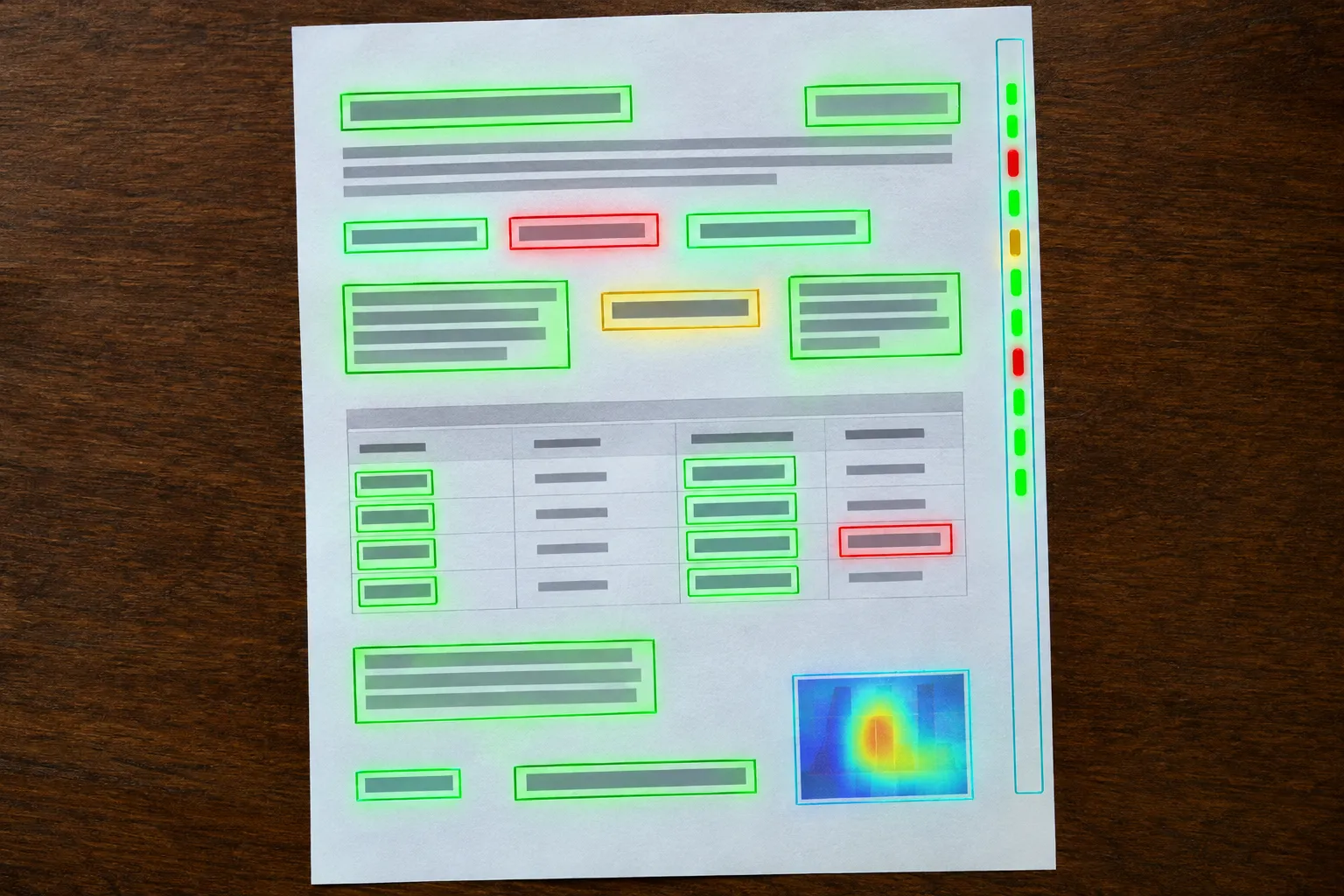
Fields pulled from invoices, forms and drawings, checked value by value against what the process confirmed. That includes fields left empty or put in the wrong place.
Benefits:
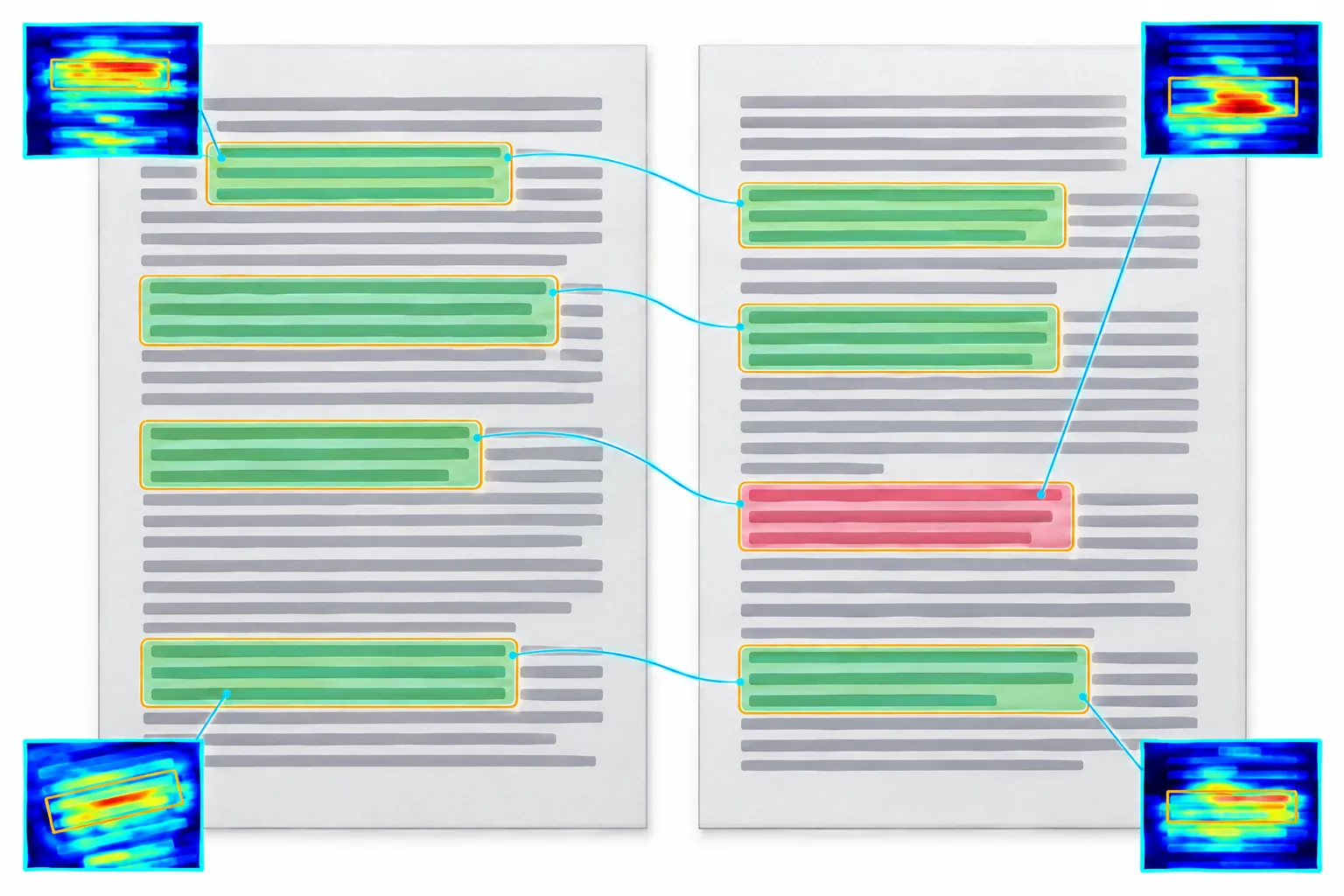
Answers written by a language model, checked sentence by sentence against the sources they claim to draw on. Grounding, completeness and refusals are measured separately from how fluent the answer reads.
Benefits:

Detection and defect models measured on the parts, lighting and cameras of your own line, with the rare defect classes weighted by what a miss would cost rather than averaged away.
Benefits:
Define what a costly error looks like before you measure speed.
From the decision to a repeatable test
We start from the decision the system is meant to make and end with a test you can rerun on every model update.
What is being decided, what the allowed answers are, and what each kind of mistake costs the business.
Real cases labelled against confirmed outcomes, with the hard cases deliberately included.
Accuracy, consistency, calibration, latency and cost, measured side by side under the same conditions.
Review thresholds and fallback rules set from the measured results, and the test wired into the release process.

Technical due diligence on a provider or product: we verify the claims, assess the architecture and give you a recommendation you can defend.

Agents that act in real systems need an evaluation set before they ship, because every model and prompt change can quietly regress them.

Where evaluation cases come from when the rare and dangerous ones cannot be collected in sufficient numbers.

Generative AI and LLM terms, plus calibration, ground truth, version pinning and the other terms that decide whether a result means what it seems to.

Not every AI decision needs a chatbot, and a structured answer can still be wrong. What decision models change and what stays the same.

Generation got cheap and checking did not. Where the checks already exist, AI output can be trusted at scale.
Whether it’s a vendor benchmark, a pilot result or your own team’s accuracy figure, we’ll tell you what it actually measures and what a test on your cases would need.
Book a Strategy & Architecture Review