
AI Product & Systems Engineering

Applied AI Engineering

Design, build, and validate AI capabilities for high-tech and deep-tech applications. We build the technically critical parts of advanced AI products — the components that decide whether the system performs in its real operating environment.

Pillar
Product & Systems
Focus
Critical AI components
Deliverable
Code you own
Built By
Practitioners since 2016
The Problem

Some components decide whether the whole system works.

Advanced AI products rarely fail everywhere at once — they fail at the one or two technically hard components that carry the risk.

01

A Critical AI Component Decides Success

The product depends on one or two technically hard AI capabilities — perception, prediction, generation, or inference under constraints. If those components underperform, no amount of surrounding software compensates.

02

Research Must Become a Product

A method works in a paper, a lab, or a research project — but the transfer into an engineered, maintainable capability with defined performance has not happened, and no one owns it.

03

The Prototype Must Become Reliable

A prototype demonstrates the idea but was never built to survive real data, real latency budgets, and real operating conditions. It now needs to become a component your team can integrate and trust.

Geospatial analytics applied to crop monitoring
What We Do

Build and validate the technically critical parts of advanced AI products.

We are not trying to replace every software, domain, or mechanical engineering capability your organization already has. We focus on the AI, data, architecture, and software components that determine whether the system can perform in its real operating environment.

That means designing, implementing, and benchmarking the models, pipelines, and interfaces at the technical core of your product — and handing them over in a form your teams can build on.

Capabilities
Computer vision
Machine learning
Deep learning
Generative AI
Geospatial and remote-sensing analytics
Data and inference pipelines
Model evaluation
Edge inference
API and system integration
Technical prototypes
Research-to-product transfer
Performance optimization
Existing-system modernization
Engagement Types

Eight ways to bring us into your engineering effort.

Engagements are scoped around a concrete technical outcome — not open-ended capacity.

01

Feasibility prototype — establish whether the capability can work under your constraints

02

Technical demonstrator — make the capability tangible for customers, partners, or investors

03

AI component development — build a production-grade component for your system

04

Model and pipeline development — data, training, evaluation, and inference end to end

05

Existing-solution improvement — raise the performance of a system already in use

06

Architecture validation — implement the critical path to prove the design holds

07

System integration — connect AI components into your product and infrastructure

08

Engineering support for an internal product team — senior capacity where it decides delivery

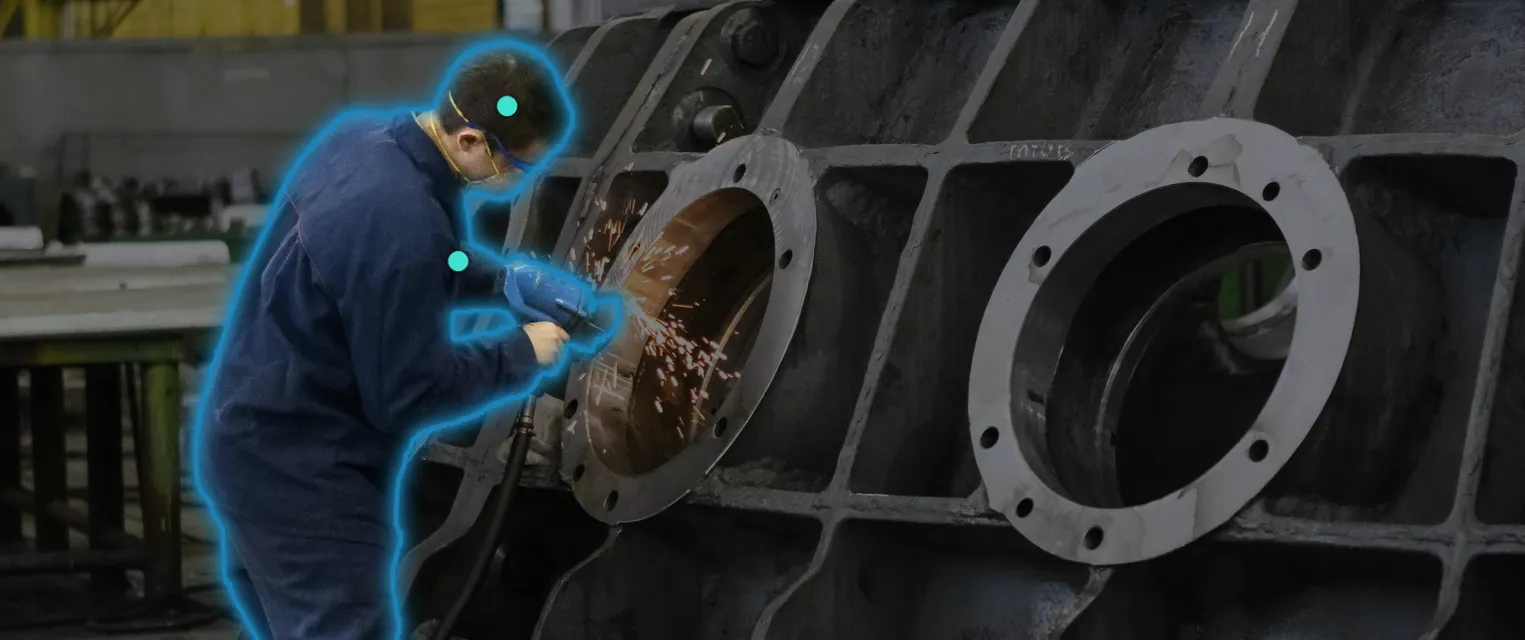
Computer vision segmentation result from an applied AI system
The Outcome
Eight engagement types. One component that performs.
Deliverables

Engineered outputs, not slideware.

01

Working Prototype or Component

A running technical artifact — prototype, demonstrator, or production-grade component — validated against your requirements.

02

Source Code

Clean, documented source code, delivered into your repositories and owned by you.

03

Model & Benchmark Results

Trained models with benchmark results against defined metrics and realistic test data — not demo conditions.

04

Data & Evaluation Pipeline

Reproducible pipelines for data preparation, training, and evaluation, so results can be re-run and extended.

05

Integration Interfaces

Defined APIs and interfaces that connect the component to your product and surrounding systems.

06

Deployment Package

The component packaged for its target environment — edge, on-premise, hybrid, or cloud.

07

Technical Documentation

Architecture, decisions, and operational notes documented for the engineers who inherit the work.

08

Handover & Engineering Recommendations

A structured handover with concrete recommendations for hardening, scaling, and further development.

How the engagement works

Our Engineering Process

Four phases, each closing with a decision or a working output — so you can stop, redirect, or scale at every gate.

1

Scope & Feasibility

We define the target capability, success metrics, and operating constraints — and assess technical feasibility before significant budget is committed.

2

Architecture & Data

Component architecture, data strategy, and evaluation design. We establish what the component must prove and on which data it will be judged.

3

Build & Benchmark

Iterative implementation of models, pipelines, and interfaces — benchmarked against the agreed metrics under realistic conditions.

4

Integrate & Hand Over

Integration into your system, deployment packaging, documentation, and a handover that leaves your team in control of the result.

FAQ

Purchasing questions we hear on this service.

Are you a development agency? Where does your scope end?

No. We do not take over your entire software, domain, or mechanical engineering effort. We build the AI, data, architecture, and software components that determine whether the system performs in its real operating environment — and we integrate cleanly with your teams and providers for everything else.

We have a research result. Can you turn it into a product component?

Research-to-product transfer is a core engagement type. We take a method that works in a paper or lab setting and engineer it into a benchmarked, maintainable component — with the data pipeline, evaluation, and interfaces the research stage never needed.

Can you work inside our existing product team?

Yes. Engineering support for an internal product team is a defined engagement type: senior AI engineering capacity applied to the components that decide delivery, working in your repositories, your toolchain, and your review process.

How do we know the result actually performs?

Performance is defined before we build. Every engagement is scoped against explicit metrics and evaluated on realistic test data, and you receive the benchmark results and the evaluation pipeline — so the evidence is reproducible after we leave.

Discuss an Engineering Challenge

Bring us the component your system depends on.

We will tell you what it takes to make it perform — and then build it.

Discuss an Engineering Challenge
nAIxt Technologies GmbH
Am Forst 2
82166 Gräfelfing, Germany
+49 89 54196515
info@naixt-technologies.de